Heart & metabolic tests
Check your cholesterol, blood sugar, and triglycerides, plus ApoB and hs-CRP for more detail.

Where to start with heart testing
Your core numbers first, then the markers that add detail.
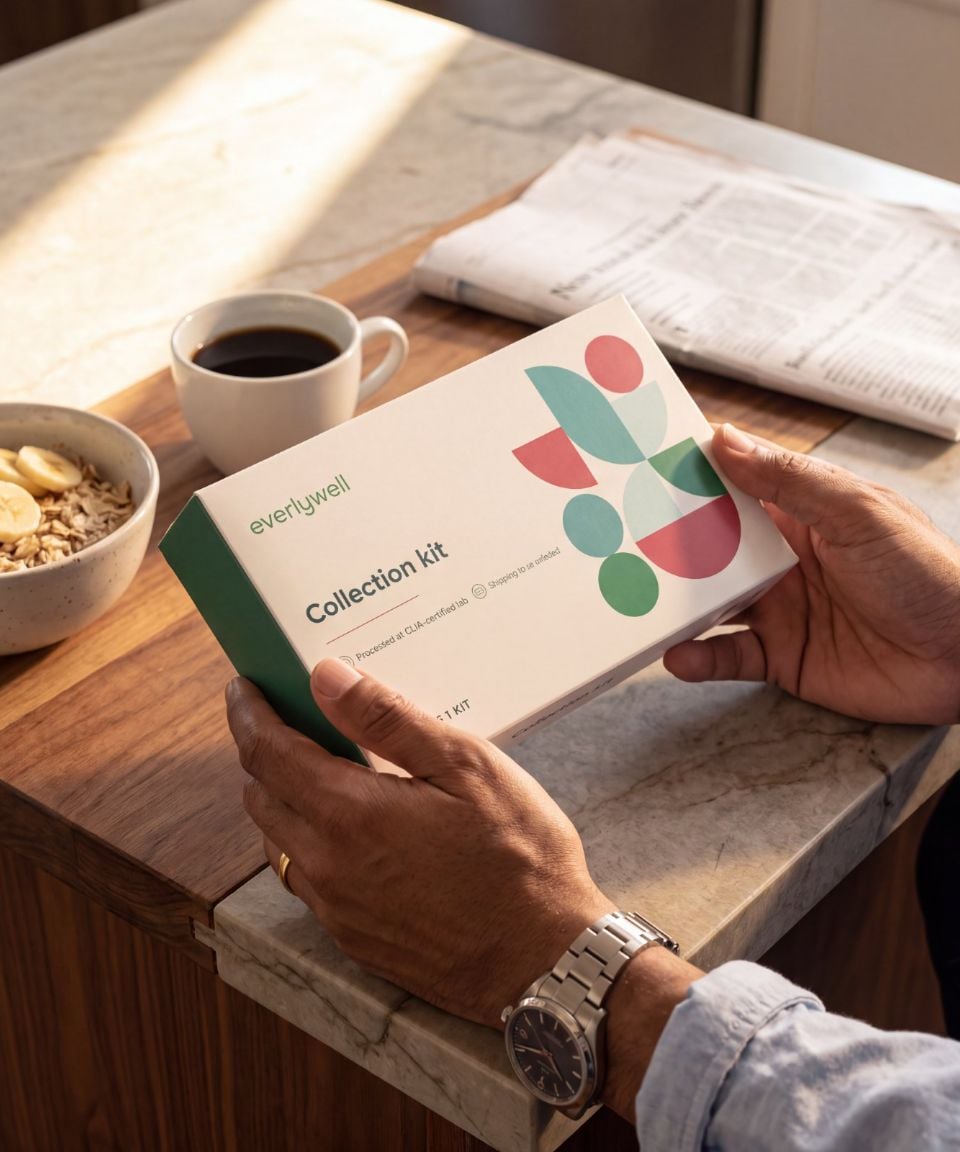
Know your numbers
Cholesterol and blood sugar control, from a finger-prick card you collect at home.
Start with

Go deeper
ApoB, hs-CRP, and particle size add context, from a blood draw at a lab.
Start with


Shop heart & metabolic tests
 At-home collection
Heart Health Test
Rated 4.78 out of 5 from 269 reviewsLipids with LDL plus A1c, one finger prick
Loading price At-home collection
Cholesterol & Lipids Test
Rated 4.76 out of 5 from 505 reviewsLipid panel with LDL from a finger prick
Loading price At-home collection
HbA1c Test
Rated 4.82 out of 5 from 321 reviewsThree-month blood sugar from a finger prick
Loading price
- In person
Metabolic & GLP-1 Monitoring Panel
A1c, insulin, glucose, chemistry, cholesterol
Loading price  At-home collection
Metabolism Test
Rated 4.57 out of 5 from 965 reviewsCortisol, testosterone, and TSH at home
Loading price
Ask about heart tests
Which heart test is right for you?
Ask in your own words, and we’ll suggest where to start.
Cholesterol, blood sugar, and a few related numbers give a picture of your heart and metabolism. Tell me what you’d like to know, and I’ll help.
AI-generated. For information only, not medical advice. Call 911 for an emergency.
About heart and metabolic testing
When to consider it
If heart disease or diabetes runs in your family, you have high blood pressure or weight changes, or it’s been years since your last cholesterol check.
What the tests measure
Cholesterol, triglycerides, and average blood sugar (A1c), plus lab markers like ApoB, hs-CRP, and particle counts that a clinician can read for context.
At home or at a lab
Kits use a few drops from a finger prick for cholesterol and A1c. A lab blood draw adds insulin, ApoB, and advanced panels. Some tests ask you to fast.
Common reasons to check your numbers
How each one connects to what a test can check.
Heart disease in the family
A family history is a reason to know your cholesterol, and ApoB adds more detail.
A past high result
A past high cholesterol or A1c result is a common reason to recheck and see the trend.
Weight changes
Weight gain around the middle can come with rising triglycerides and insulin.
Thirsty or tired often
Frequent thirst or urination can signal high blood sugar. See a clinician soon, and check A1c.
Tracking a change
After a change in diet or exercise, rechecking cholesterol and A1c shows what moved.
Due for a check
Heart biomarkers, explained
14 biomarkers across these tests, and what each one tells you.
Why it’s checked
It’s a starting number. How it splits between LDL and HDL tells you more about your heart risk.
Reading your result
It’s read with LDL, HDL, and triglycerides. A high total with high HDL means something different from a high total with high LDL.
Why it’s checked
Higher LDL over time raises the risk of plaque, heart attack, and stroke, and it’s a main focus of care.
Reading your result
Lower is generally better, and your target depends on your other risk factors. Diet, activity, and genetics all shape it.

Why it’s checked
Higher HDL is generally linked with lower heart risk, though it’s read with your other lipid results.
Reading your result
Higher is generally better, though very high levels aren’t always protective. Activity can raise it; smoking lowers it.
Why it’s checked
High triglycerides add to heart risk and often travel with insulin resistance and high blood sugar.
Reading your result
They rise after a meal, so some tests ask you to fast first. Alcohol and sugar can also raise them quickly.
Why it’s checked
It can show risk that LDL alone misses, especially when triglycerides are high or you have diabetes.
Reading your result
It adds to what LDL tells you. A high ApoB with a normal LDL can mean you have many small particles.
Why it’s checked
The home collection hemoglobin A1C test is an easy way to evaluate how well you have been maintaining your blood glucose control for the past 90 days and can help you determine if dietary changes may be needed.
Reading your result
An HbA1c measurement lets you know how well your blood sugar levels have been controlled over the past 90 days.
Why it’s checked
A fasting glucose helps screen for prediabetes and diabetes, often read alongside A1c.
Reading your result
Fasting for at least 8 hours gives the most useful result.
Why it’s checked
Fasting insulin can rise in insulin resistance while blood sugar still reads in range.
Reading your result
It’s most useful fasting and read with glucose. Together they show how hard your body is working to keep blood sugar steady.
Why it’s checked
Ongoing inflammation is linked to heart disease, so hs-CRP adds context to your cholesterol numbers.
Reading your result
A cold, an injury, or hard exercise can raise it for a few days, so test when you feel well and read it with your lipids.
Why it’s checked
Two people with the same LDL can have very different particle counts, and more particles have been linked to more risk.
Reading your result
Read with ApoB and LDL. When the particle count is higher than your LDL suggests, your risk may be higher too.
Why it’s checked
Smaller, denser LDL particles have been linked in research to higher heart risk than larger ones.
Reading your result
It’s read with particle number and ApoB. How many particles you have usually matters more than their size.
Why it’s checked
It adds detail to your standard HDL cholesterol result in an advanced lipid report.
Reading your result
It’s read with your HDL cholesterol and the rest of the particle report from the same draw, not on its own.
Why it’s checked
It rises and falls with triglycerides and adds to the picture of heart risk from your other lipids.
Reading your result
Because it’s calculated from triglycerides, it moves when they do, and fasting gives the most reliable value.
Why it’s checked
High levels are linked to heart and blood vessel disease and can point to low B vitamins.
Reading your result
B vitamins shape it, so it’s often read with B12 and folate. Kidney function and some medicines can raise it too.
Good to know
Your numbers are a starting point.
- These tests don’t check for a heart attack. For chest pain or trouble breathing, call 911.
- Some tests ask you to fast first, so check each test’s prep before you collect or visit a lab.
- A single result isn’t a diagnosis. Talk to a clinician about what your numbers mean for you.
Heart health articles
All articlesExplore more categories
All tests



Questions
Common questions.
Plain answers before you order.
Kits fit your schedule: collect at home and mail it back in the prepaid mailer. A lab visit covers more tests, such as insulin, ApoB, hs-CRP, and advanced lipid panels, from one blood draw.
Order online. A licensed clinician reviews your request, then you collect at home or visit a lab. A clinician can help you read results with your history.
The Heart Health Panel and Advanced Heart Panel report total cholesterol, HDL, triglycerides, VLDL, and ApoB, but not LDL. The at-home Heart Health and Cholesterol & Lipids tests, and the Complete Health Panels, report a calculated LDL.
Yes. FSA and HSA cards are accepted at checkout. What counts as an eligible expense depends on your plan, so check with your plan administrator if you’re unsure.